with
This format was designed and carried out within the MAKEAWARE! team in collaboration with colleagues from the Master in Interaction Design at SUPSI.
Resources and materials from the MAKEAWARE! project were reorganised into interactive formats through the design of conversational interfaces. Prototypes were developed to explore new ways of accessing the contents, inviting participants to experiment with dialogue-based interaction as an alternative mode of engagement and learning.
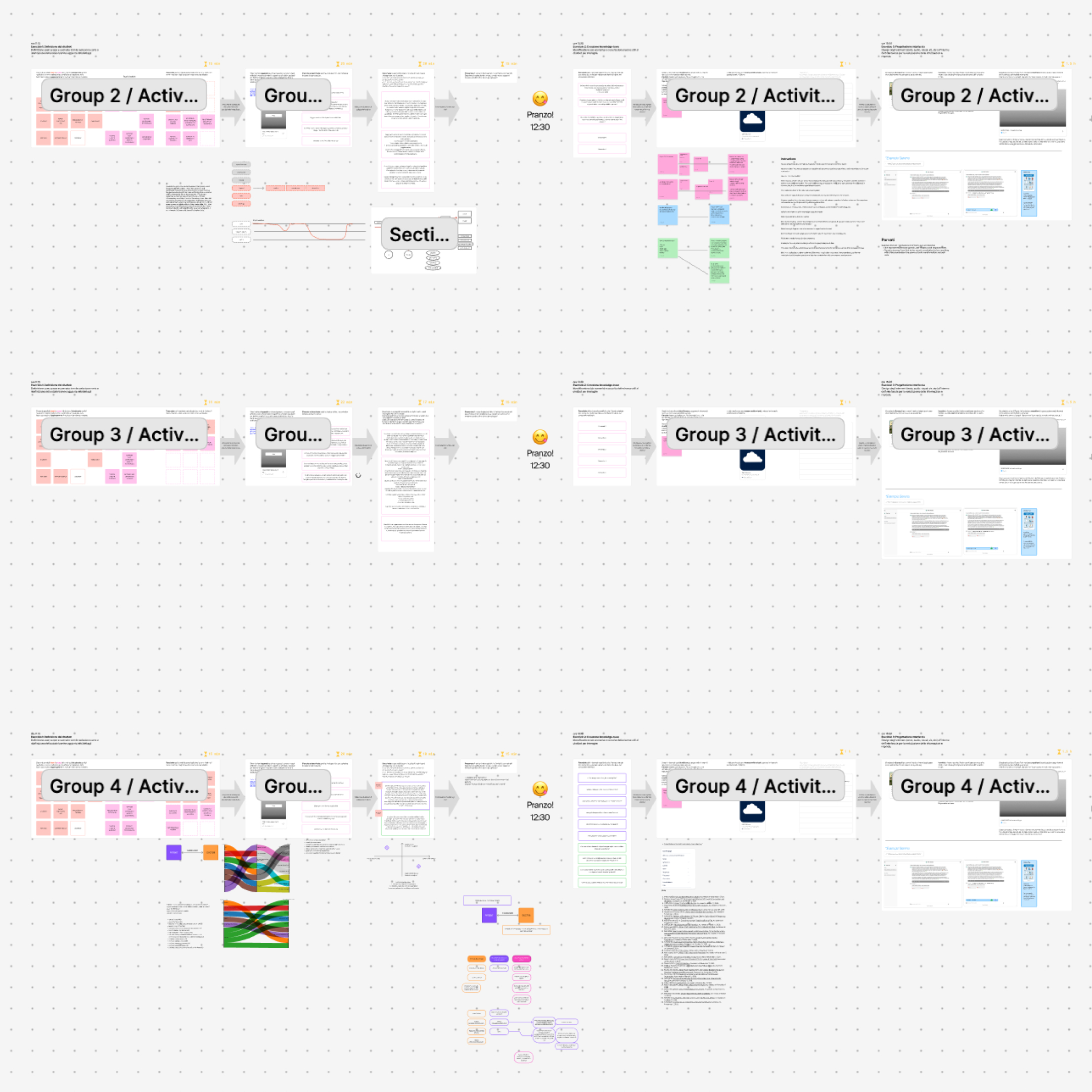
This format was designed to guide the MAKEAWARE! team through the complete process of imagining, structuring, and designing conversational systems to make the data collected during the project interactively accessible. After defining a target user, purpose, and usage scenario for their chatbot, participants built a knowledge base by identifying and gathering the resources needed for effective responses.
This process helped surface useful materials encountered during the project and supported a more detailed organisation of data across different formats. The goal was to explore new possibilities for presenting MAKEAWARE! results through the project repository and to open ideas for further integration of data and formats, with particular attention to those that can better address the public.
This format was designed and carried out within the MAKEAWARE! team in collaboration with colleagues from the Master in Interaction Design at SUPSI.
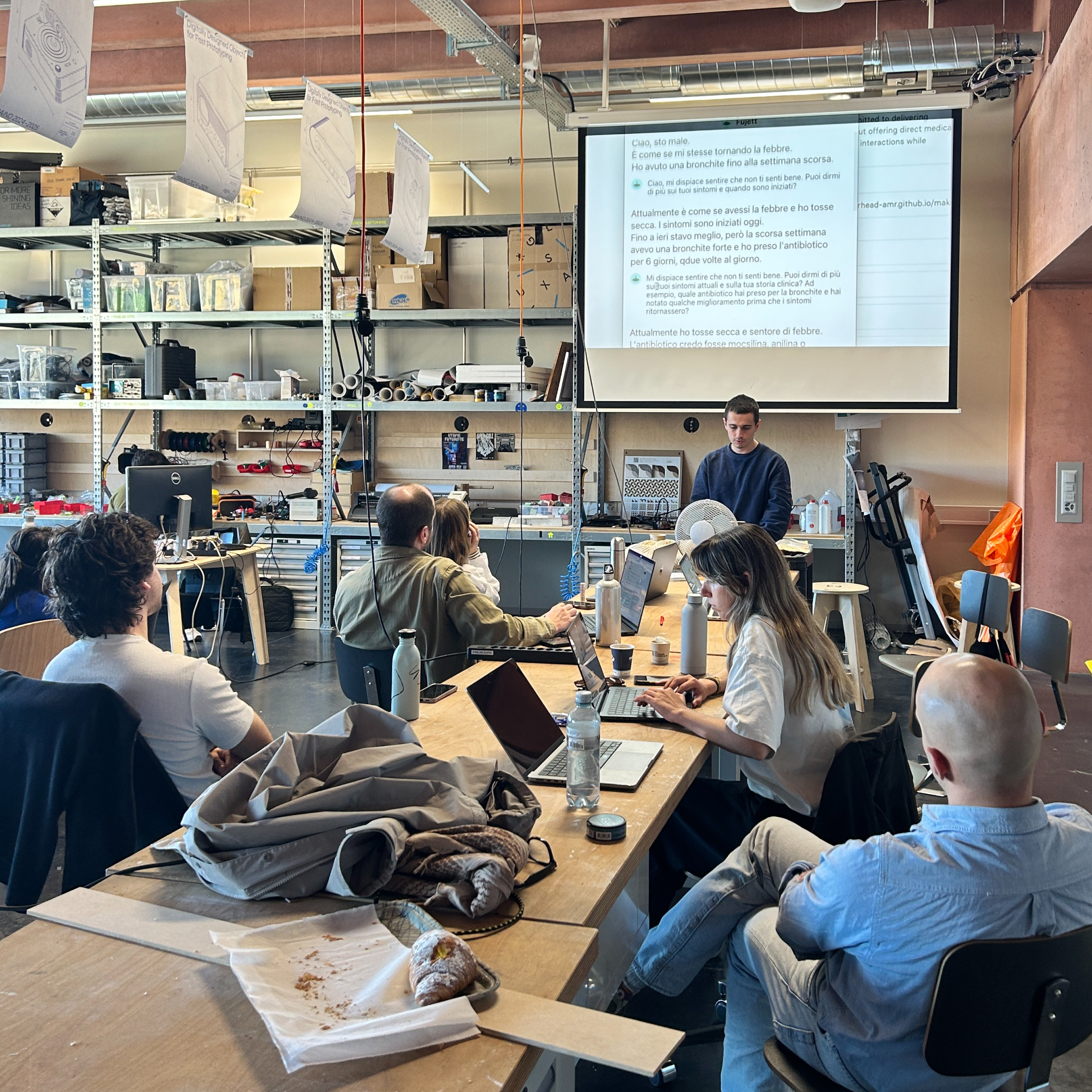
The format is designed as a one-day workshop. It begins with a collective introduction to the goals, content, and examples of chatbot applications, followed by an exercise where participants, working in pairs, define a target user, a purpose, and a usage scenario for their chatbot. The second part focuses on building a knowledge base by identifying and collecting the resources the chatbot would need to respond effectively. In the afternoon, participants move to interface design, creating textual, audio, and visual elements within a prototype that illustrates how the chatbot communicates information. The workshop concludes with group presentations and feedback, showcasing different approaches to transforming initial ideas into conversational interfaces.
This session was held only once, after which the team worked on integrating the results into the final repository, making the sources and materials produced available for exploration.
The workshop functioned as an exploratory participatory process that helped identify methods for building a knowledge base and technically structuring the chatbot, now available in this repository under “Sources.” The chatbot serves a dual purpose: on one side, it presents the research topic to citizens by explaining practices of antibiotic consumption and resistance, without claiming to replace medical professionals or offering diagnostic advice; on the other, it can be used to explore the project’s methodology through questions designed to replicate certain formats or generate creative solutions for situations and phenomena in similar contexts.